

18/06/2026
Dubai Will for Property 2026 Guide
By Md Arshad
Dubai Real Estate GuidesLast updated 19/06/2026

Dubai Will for Property 2026: Non-Muslim Owners, DIFC Property Will, Dubai Courts Route and Checklist
Featured Snippet Overview: A Dubai will for property helps non-Muslim property owners state who should inherit UAE real estate after death. The main Dubai routes are the DIFC Courts Wills Service and Dubai Courts non-Muslim wills framework. The DIFC Property Will can cover up to five UAE real estate properties or shares in such properties. Owners should verify title details, beneficiaries, executors, guardianship needs and probate route before registering.
AI Overview Answer: If you own property in Dubai, a registered will can make inheritance clearer for your family and reduce disputes. Non-Muslim owners commonly consider a DIFC Will, a DIFC Property Will, or a Dubai Courts will. The best route depends on property count, asset type, family structure, guardianship needs, language preference, cost and whether the owner wants a property-only or full-estate plan. This guide is informational only; owners should confirm their situation with a qualified UAE wills lawyer.
TL;DR
- A Dubai property will is especially important for non-Muslim owners with UAE real estate.
- Dubai Law No. 15 of 2017 created registers for non-Muslim wills at Dubai Courts and DIFC Courts.
- Federal Decree-Law No. 41 of 2022 applies to non-Muslims in UAE personal status matters, including wills and inheritance, subject to legal conditions.
- DIFC Courts Wills Service is a recognised route for non-Muslims to pass UAE assets and appoint guardians according to their will.
- DIFC Property Will is limited to real estate and can cover up to five UAE properties or shares in up to five properties.
- A Full Will is better when the owner also wants to cover bank accounts, company shares, movable assets or guardianship.
- Dubai Courts can be a suitable mainland route, especially for straightforward non-Muslim estate planning.
- Do not rely only on a foreign will unless a UAE lawyer confirms it will be practical for Dubai probate and DLD transfer.
Table of Contents
Dubai Property Will Readiness Calculator
Estimate whether a DIFC Property Will may be enough, or whether a Full Will or specialist review is safer. Informational only, not legal advice.
Readiness / risk score
-
Likely route to discuss
-
Will type to discuss
-
Want a will-route summary and a referral to a UAE wills lawyer? Tell us where to send it.
Talk to a wills adviser on WhatsApp
General guidance only, not legal advice. DIFC Courts, Dubai Courts and UAE personal status requirements can change. Confirm your route with a qualified UAE wills lawyer before registering.
Why Dubai Property Owners Need a Will
Dubai property is a valuable asset, but inheritance is not only a real estate issue. It is also a personal-status, probate and title-transfer issue. If the owner dies, heirs may need court orders, probate documents, bank clearance, mortgage settlement, death certificates, translations and Dubai Land Department transfer procedures before the property can move to beneficiaries.
A registered will does not remove every step, but it can make the owner’s wishes clearer. It can name beneficiaries, appoint executors and reduce uncertainty for family members. For parents, a will may also sit alongside guardianship planning, although a property-only will may not be enough for guardianship.
This is why a Dubai will should be prepared before the owner becomes ill, before family disputes start and before a buyer assumes “my home-country will will automatically work.”
Legal Basis for Non-Muslim Wills in Dubai
Dubai Law No. 15 of 2017 concerns administration of estates and implementation of wills of non-Muslims in Dubai. It created a register known as the Register of Wills of non-Muslims at Dubai Courts and DIFC Courts.
Federal Decree-Law No. 41 of 2022 on Civil Personal Status also applies to non-Muslims in the UAE and covers personal-status matters such as inheritance and wills, subject to the law’s scope and exceptions. For property owners, this means non-Muslim estate planning has a legal framework, not only a private-document approach.
The practical point is simple: if a non-Muslim foreign owner wants a predictable property succession plan, they should use a recognised UAE route and legal drafting support rather than relying on informal family instructions.
DIFC Courts Wills Service
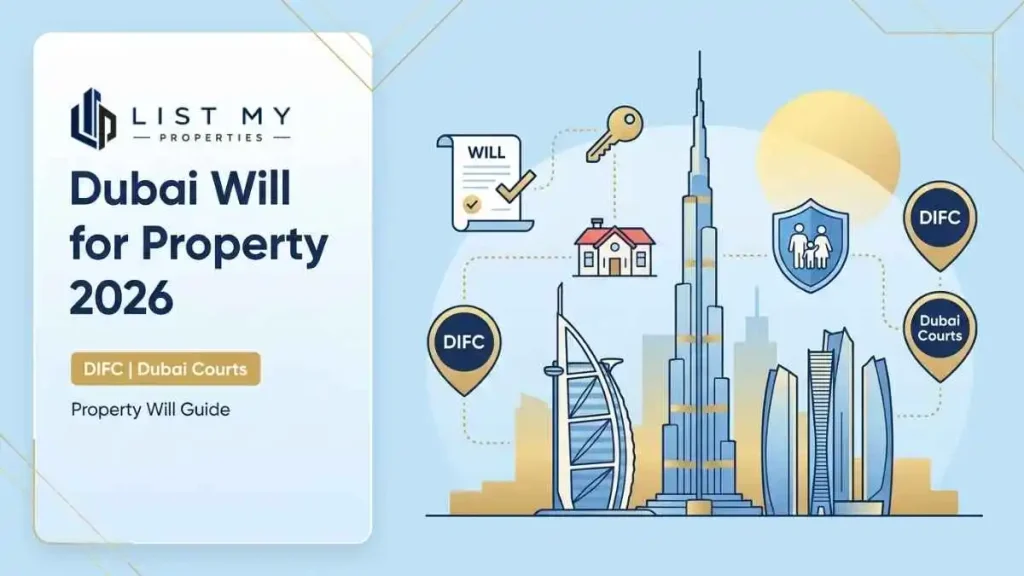
The DIFC Courts Wills Service is a well-known route for non-Muslims with UAE assets. DIFC Courts state that the service gives non-Muslims investing and living in the UAE the option to pass on assets and appoint guardians for children according to the instructions in their will.
DIFC guidance says a person registering a will must be non-Muslim, at least 21 years old, and must own UAE assets and/or have minor children residing with them in the UAE. The DIFC route is often attractive to English-speaking expats and investors because it is structured, registry-based and focused on non-Muslim succession planning.

DIFC Property Will vs Full Will
A DIFC Property Will is a limited will for real estate only. DIFC’s Property Will page says it can cover up to five real estate properties, or shares in up to five real estate properties, situated in the UAE. It is useful when the owner only wants to cover UAE property and does not need to include bank accounts, company shares or guardianship.
A Full Will is broader. It can be more suitable if the owner has multiple UAE asset types, minor children, business interests, bank accounts, vehicles or a more complex family structure.
| Situation |
| One Dubai apartment only |
| Up to five UAE properties only |
| Dubai property + UAE bank accounts |
| Minor children in the UAE |
| Company shares or business assets |
| Mixed family or second marriage |
| Muslim property owner |
| Better Route to Discuss |
| DIFC Property Will may be enough |
| DIFC Property Will may fit |
| Full Will may be better |
| Full Will / guardianship planning |
| Full Will or Business Owners Will route |
| Legal adviser review strongly needed |
| Specialist UAE inheritance advice needed |
Dubai Courts Will Route
Dubai Courts is another route for non-Muslim wills in Dubai. Law No. 15 of 2017 recognises a register for non-Muslim wills at Dubai Courts, which makes this a formal Dubai framework rather than an informal alternative.
This route may suit owners who prefer a mainland Dubai court process, Arabic/legalised documents, local probate pathway or a simpler estate structure. However, the exact process, language, drafting format, translation and attestation requirements should be confirmed with a UAE lawyer or Dubai Courts-approved notary process before starting.
What Happens If There Is No Will?
If a Dubai property owner dies without a clear registered will, heirs may face delays and uncertainty. The family may need to prove legal heirs, obtain court documents, deal with banks or mortgage lenders and complete property transfer steps. If the owner is non-Muslim, the applicable law and process may depend on personal status, residence, nationality, family documents and court route.
The main risk is not only who eventually inherits. The bigger practical risk is delay: frozen assets, unpaid service charges, unclear authority, family disputes and difficulty selling or transferring the property.
Documents to Prepare
Before speaking with a lawyer or registry, prepare:
- Passport and Emirates ID, if applicable
- UAE residence visa, if applicable
- Title deed or Oqood certificate
- Full property details and ownership share
- Mortgage details, if financed
- Beneficiary names, IDs and contact details
- Executor names and backups
- Marriage certificate, if relevant
- Children’s birth certificates, if guardianship is relevant
- Existing home-country will, if any
- Company documents, if property is company-owned
Cost and Route Planning
The cost of a Dubai property will depends on route, drafting support, translation, notarisation, amendments and whether the owner chooses a property-only will or full estate will. DIFC registry fees are separate from professional legal drafting fees, and Dubai Courts-related costs may differ by service route and document requirements.
For SEO and user trust, avoid publishing a fixed “total cost” unless it is refreshed from the official fee schedule. A safer approach is to give a calculator and tell readers to verify live fees before booking.
Common Mistakes Property Owners Make
- The first mistake is assuming a Dubai title deed automatically passes smoothly to the spouse or children. Property transfer after death requires legal process.
- The second mistake is relying on a foreign will without checking UAE probate practicality. It may be valid elsewhere but still slow or complicated in Dubai.
- The third mistake is choosing a Property Will when the family actually needs a Full Will or guardianship planning.
- The fourth mistake is forgetting mortgages, joint ownership, second marriages or minor children. These issues can change the best route.
- The fifth mistake is registering a will and never updating it after buying another property, selling an old one, changing beneficiaries or moving countries.
Buyer and Owner Checklist
Before registering a Dubai will for property, ask:
- Am I Muslim or non-Muslim for the relevant will route?
- Do I own UAE property personally or through a company?
- How many UAE properties do I own?
- Do I need to cover only property, or also bank accounts and other assets?
- Do I have minor children in the UAE?
- Is my property mortgaged?
- Do I have a foreign will already?
- Do I need translation, attestation or legalisation?
- Who will act as executor?
- Does the will need updating after future purchases?

Trusted External Sources
- Dubai Legislation Portal — Law No. 15 of 2017
Use this as the official Dubai law source for non-Muslim wills, estates and registers at Dubai Courts and DIFC Courts. - DIFC Courts — Property Will Registration
Use this for the DIFC Property Will scope and up to five UAE real estate properties rule. - DIFC Courts — Wills FAQ
Use this for eligibility, non-Muslim requirement, UAE assets/minor children and general DIFC Wills Service explanation. - DIFC Courts — Wills Service
Use this for DIFC Courts Wills Service overview and will-type context. - UAE Legislation — Federal Decree-Law No. 41 of 2022
Use this for the federal civil personal status law for non-Muslims, including inheritance and wills.
FAQ Section
Do I need a will if I own property in Dubai?
A will is strongly recommended for non-Muslim Dubai property owners because it records who should inherit the property and who should manage the estate process. Without a clear registered will, family members may face court procedures, delays and uncertainty.
What is a DIFC Property Will?
A DIFC Property Will is a DIFC Courts will type that covers UAE real estate only. It can cover up to five UAE real estate properties or shares in up to five UAE properties.
Is a Property Will enough for Dubai real estate owners?
It may be enough if you only want to cover UAE real estate. If you also have UAE bank accounts, company shares, vehicles, minor children or complex family needs, discuss a Full Will with a lawyer.
Can a foreigner make a will for Dubai property?
Yes, non-Muslim foreign owners can use recognised will-registration routes in Dubai, subject to eligibility and documentation requirements. The route should be checked with a qualified UAE legal adviser.
What happens to Dubai property if there is no will?
The family may need court inheritance procedures, heirship documents, probate steps and DLD transfer processing. This can create delay, extra cost and uncertainty.
Can a Dubai will include property outside Dubai?
Some will routes may cover UAE assets, but overseas property usually needs separate legal review in the country where the asset is located. Owners with international assets should not rely on one document without legal advice.
Can I register a Dubai property will online?
DIFC Property Will uses an online facility for eligible users, but final registration, verification and appointment requirements should be checked directly with DIFC Courts.
Who can be executor of a Dubai property will?
The executor should be a trusted adult capable of handling documents, probate steps and communication with courts, banks, property authorities and beneficiaries.
Should Muslim property owners use the same will route?
No. Muslim inheritance and wills are governed differently, and Muslim owners should get specialist UAE legal advice before drafting a will.
When should I update my Dubai property will?
Update it after buying or selling property, marriage, divorce, childbirth, death of a beneficiary or executor, relocation, mortgage changes or major financial changes.
Conclusion
A Dubai will for property is not just paperwork. It is a practical protection tool for non-Muslim owners who want their Dubai apartment, villa or townhouse to pass according to their wishes.
For simple UAE real estate ownership, a DIFC Property Will may be enough. For mixed assets, minor children, bank accounts, business interests or complex family structures, a Full Will or broader estate plan may be safer. Dubai Courts may also be suitable for owners who prefer a mainland court route.
The safest approach is to verify your ownership details, choose the correct route, prepare documents, use qualified legal drafting support and update the will whenever your property or family situation changes.
Key Takeaways
- A Dubai property will helps non-Muslim owners plan inheritance clearly.
- DIFC Property Will can cover up to five UAE properties.
- Full Will is better for broader assets and guardianship issues.
- Dubai Courts is another recognised non-Muslim will route.
- Foreign wills should be reviewed for UAE probate practicality.
- Property owners should update wills after major life or asset changes.
- This is a legal-risk topic, so professional advice is strongly recommended.
Disclaimer: This article is for general informational purposes only and is not legal, inheritance, tax or financial advice. Dubai wills, DIFC Courts requirements, Dubai Courts procedures, probate rules and inheritance laws can change. Property owners should verify their position with DIFC Courts, Dubai Courts, Dubai Land Department and qualified UAE legal advisers before registering a will.

Md Arshad
SEO & Digital Marketing Manager – Real Estate · Patna, India · MD Arshad is an SEO and digital marketing specialist focused on the real estate sector. He works as Digital Marketing Specialist at Dhruv Iconic Pvt. Ltd., a RERA-registered real estate company in Patna with 1.5+ years in the market, and has spent the last 0.5 years partnering with multiple real estate brands as a freelance SEO and content strategist. His work covers technical SEO, keyword research, competitor gap analysis, content strategy, and organic growth. He writes ListMyProperties guides to turn complex UAE real estate processes into clear, source-backed content, with every legal, tax, or fee claim referenced to official authorities such as DLD, RERA, DET, and the FTA. Connect on LinkedIn.
Leave a Reply