

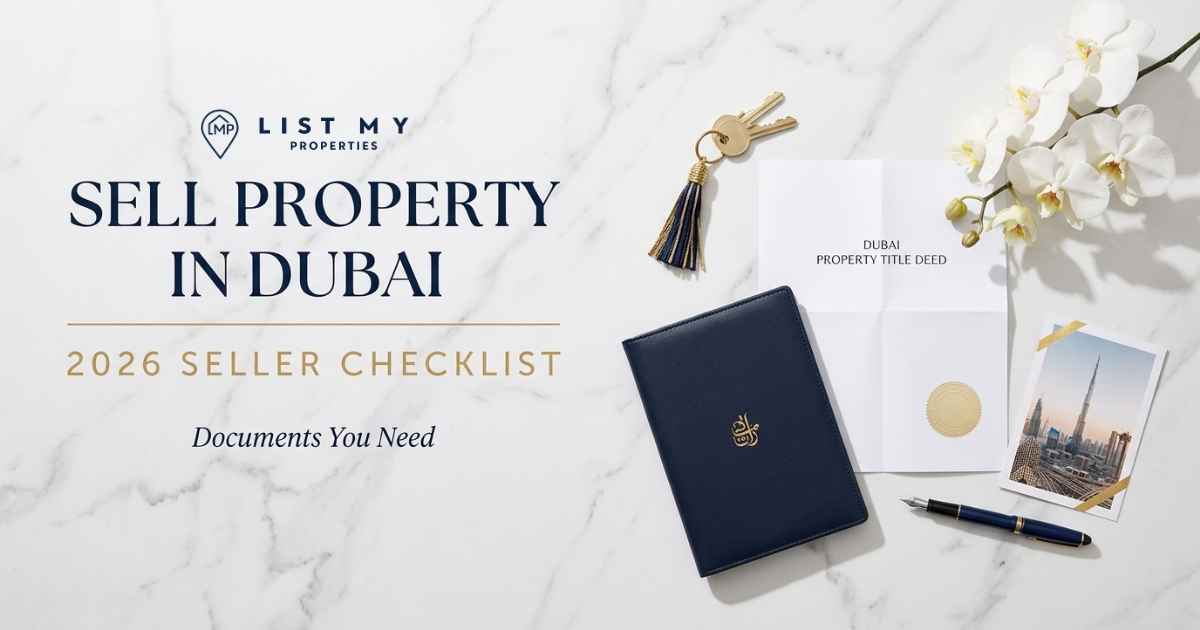
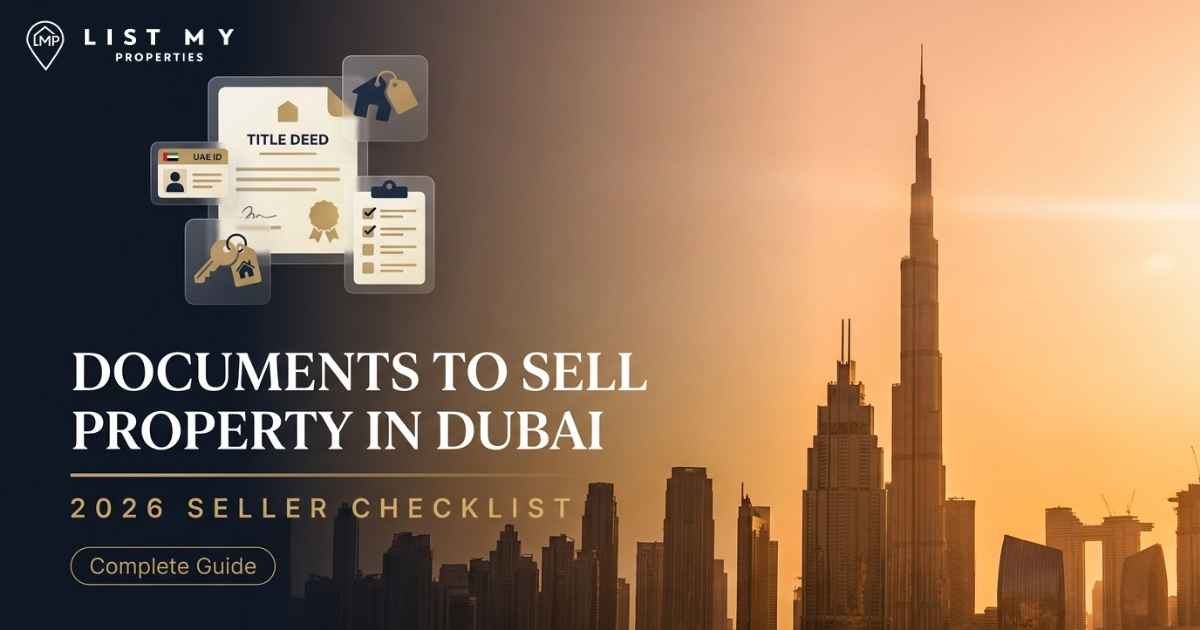
- Core documents: title deed, Emirates ID or valid passport, developer e-NOC (freehold), Form F / sale agreement, mortgage papers, Ejari/tenancy and POA if represented.
- DLD verifies Emirates ID of both seller and buyer (or passport for non-residents) — no copies are taken.
- e-NOC from the developer is required in freehold areas via the Dubai REST App.
- Mortgaged sales add a bank/developer liability letter and manager cheques.
- Prepare documents before listing, not after finding a buyer — it prevents delays.
Main Documents Required to Sell Property in Dubai
To sell property in Dubai you need the title deed, Emirates ID or a valid passport for non-residents, a developer e-NOC in freehold areas via the Dubai REST App, Form F / sale agreement, mortgage documents if financed, Ejari and tenancy details if rented, and a Power of Attorney if represented.
Quick Answers
What documents are required to sell property in Dubai? Title deed, Emirates ID or passport, developer e-NOC in freehold areas, Form F, mortgage papers if financed, Ejari if rented, and POA if represented.
Is e-NOC required to sell? Yes — DLD lists a developer no-objection e-certificate in freehold areas via the Dubai REST App as a required document for sale registration.
Can a non-resident sell property in Dubai? Yes — DLD accepts a valid passport for non-resident foreigners as identity verification.
What documents are needed for a mortgaged property? A bank or developer liability letter, ID verification, manager cheques, and a legal POA if someone acts on a party’s behalf.
Key Facts box
- Identity: Emirates ID (both parties) / passport for non-residents — Source: DLD
- e-NOC: developer, freehold, via Dubai REST App
- Mortgaged: liability letter + manager cheques
- Schema: Article + Breadcrumb + FAQPage + speakable.
Table of Contents
Selling property in Dubai is not only about finding a buyer. The transaction moves properly only when the seller has the right documents ready before the sale reaches the transfer stage. Missing paperwork can delay the deal, weaken buyer trust, or create last-minute stress at the Real Estate Registration Trustee office.
This guide explains the documents required to sell property in Dubai in 2026, including title deed, Emirates ID, valid passport for non-resident sellers, e-NOC, Form F, mortgage-related documents, Ejari, tenancy details, and power of attorney. It is written for property owners, landlords, overseas sellers, and investors who want a clean, compliant, and faster property sale.
Why Documents Matter Before Selling Property in Dubai
Documents are the foundation of the Dubai property sale process. Before a buyer commits fully, they want confidence that the seller can legally transfer the property. A title deed proves ownership, identity documents verify the contracting parties, and e-NOC helps confirm developer clearance in freehold areas.
Dubai Land Department describes property sale registration as a service for registering a full or partial sale transaction between seller and buyer, or their legally authorized representatives. The service applies to the purchase of land, property, or a completed real estate unit.
Poor document preparation also affects pricing and negotiation. If a seller is missing NOC, mortgage details, or tenancy records, a buyer may reduce the offer or delay deposit payment. A clean seller documents checklist helps the sale feel professional from the first viewing to final transfer.
Main Documents Required to Sell Property in Dubai
For most individual sellers, the core documents include proof of identity and transfer approval documents. DLD lists Emirates ID of both seller and buyer for identity verification, or valid passport for non-resident foreigners, plus a developer e-NOC in freehold areas via Dubai REST App.
In practical selling terms, the seller should prepare more than the minimum transfer-stage documents. The buyer, broker, bank, developer, and trustee office may each need different supporting information depending on property status.
Seller Document Checklist
| Document | Required For | Why It Matters |
|---|---|---|
| Title deed | Ownership proof | Confirms the seller owns the property |
| Emirates ID | UAE resident identity verification | Used for seller/buyer verification |
| Valid passport | Non-resident seller verification | Required where Emirates ID is not available |
| e-NOC | Freehold property transfer | Confirms developer no objection |
| Form F / sale agreement | Sale terms | Records buyer, seller, property, and agreed price |
| Mortgage documents | Mortgaged property | Needed for liability and release process |
| Ejari / tenancy contract | Rented property | Shows tenant status and rental terms |
| Power of Attorney | Representative-led sale | Allows authorized person to act |
| Service charge clearance | Developer/building clearance | Helps avoid transfer delays |
| Oqood, if applicable | Certain off-plan/pre-title cases | Shows registration status for applicable property |
Document Readiness Checker
Tick the documents you already have and instantly see if your Dubai property sale file is ready for transfer.
Get my free document & sale review
Our Dubai team will confirm exactly which documents you still need for a smooth transfer.
Title Deed: The Most Important Ownership Document
The title deed is the seller’s strongest proof of ownership. Without clear ownership evidence, the sale cannot move confidently toward transfer. Buyers, brokers, banks, and trustee offices may all need to confirm property ownership before finalizing the transaction.
Dubai Land Department’s sale registration process issues an electronic title deed as one of the issued documents after the transfer process. This makes the title deed central to both the seller’s proof before transfer and the buyer’s proof after completion.
Sellers should check that the title deed information matches the property being sold. The name, property details, and ownership status should be reviewed before marketing begins. If there is any mismatch, old ownership record, company ownership issue, inheritance issue, or mortgage complication, it should be handled before the buyer reaches the transfer stage.
Emirates ID or Passport for Seller Verification
Identity verification is a basic requirement in Dubai property sale registration. DLD states that Emirates ID of both seller and buyer is used for identity verification, and no copies are taken. For non-resident foreigners, a valid passport is used.
This matters for both resident and overseas sellers. A UAE resident seller should make sure the Emirates ID is valid and available. A non-resident seller should keep a valid passport ready and confirm whether any additional authorization or representative documentation is needed.
Identity documents should be checked early because expired or inconsistent identity records can delay processing. If the seller’s name appears differently across documents, the issue should be reviewed before the deal reaches trustee office submission.
e-NOC from Developer in Freehold Areas
A no-objection certificate is one of the most important transfer-related documents. DLD lists a no-objection e-certificate from the developer in freehold areas via the Dubai REST App as a required document for sale registration.
The e-NOC helps confirm that the developer has no objection to the transfer. In many cases, it may relate to service charges, property status, or developer clearance requirements. A buyer will usually want confidence that the property can be transferred without developer-side issues.
Sellers should not wait until the last minute to think about NOC. If service charges are pending or developer conditions need to be cleared, the sale timeline can become slower. Preparing for e-NOC early makes the transaction look more serious and organized.


Form F / Sale Agreement
Form F, often referred to as the sale agreement or unified sale contract in Dubai real estate discussions, records the agreed terms between buyer and seller. It typically covers the property, parties, price, deposit, commission, and transaction conditions.
Although the exact contract process should be handled by the broker or authorized professionals, the seller should understand that verbal agreement is not enough. A serious sale needs clear written terms so both buyer and seller know what has been agreed.
Form F also supports transparency. It reduces confusion around payment timing, transfer date, fixtures, handover, tenant status, and broker commission. Sellers should read the document carefully before signing and ask questions if anything is unclear.
Mortgage Documents for Mortgaged Property
If the property is mortgaged, the seller needs additional documents and bank coordination. DLD has a separate service for registering the sale of a mortgaged property. This service helps reserve rights between parties and complete the sale after mortgage release documentation is submitted.
For mortgaged property, DLD lists required documents such as a liability letter from the bank or a letter from the developer for the remaining amount, UAE ID/passport verification for seller and purchaser, manager cheques, and legal power of attorney if someone acts on behalf of a party.
This is where many sellers face delays. They find a buyer, agree on the price, then realize the bank release process needs time. If the property is financed, the seller should speak with the bank early and understand settlement amount, liability letter, release process, and cheque requirements.
Ejari and Tenancy Documents for Rented Property
A rented property can still be sold, but tenancy details must be clear. If the property is tenanted, the buyer needs to know rent amount, contract dates, notice status, renewal conditions, and whether the purchase is for investment or end-use.
Ejari is important because it records tenancy information. While Ejari may not always be the headline transfer document for every sale, it directly affects buyer expectations. An investor may like a tenanted property with strong rent. An end-user may prefer vacant possession or a clear future move-in timeline.
The seller should prepare the tenancy contract, Ejari certificate, rental payment status, tenant communication records, and any notice documents if applicable. This helps avoid disputes after the offer is made.
Power of Attorney for Overseas or Representative-Led Sale
Some sellers are outside the UAE or unable to attend the sale process personally. In such cases, a legally valid Power of Attorney may be required if someone is acting on behalf of the seller.
DLD’s mortgaged property sale process lists legal power of attorney as required where someone is acting on behalf of a party. This is especially important for overseas owners, company representatives, family representatives, or investors managing property remotely.
The seller should not assume any informal authorization will work. If a representative is involved, the Power of Attorney should be properly prepared, valid, and accepted for the transaction type.
Oqood and Off-Plan Property Documents
Oqood can be relevant for certain off-plan or pre-title property situations. If the property is not yet fully transferred into a standard title deed structure, the documentation may differ from a completed ready-property sale.
For off-plan or developer-related sales, the seller should prepare the sale and purchase agreement, payment records, developer statements, Oqood details if applicable, and any assignment or resale approval requirements.
This area can be more complex than a simple ready-property resale. Sellers should confirm the developer’s resale process and check whether there are payment milestones, transfer restrictions, or administrative fees before accepting an offer.
Company-Owned Property Documents
If the property is owned by a company, the documentation is more detailed than a personal sale. DLD’s service terms state that a company must be registered by submitting a company registration request.
A company-owned property sale may require documents such as trade license, shareholder documents, authorization letters, board resolution, Memorandum of Association, Power of Attorney, and identity documents for authorized signatories. Exact requirements should be confirmed based on the company type and transaction route.
This section is important because company-owned property sales can be delayed if the signatory authority is unclear. Sellers should confirm who is legally allowed to sign before marketing the property.
DLD Sale Registration Process: What Happens at Transfer
DLD explains that at the service center, the parties visit a Real Estate Registration Trustee office and submit required documents for employee verification. Missing documents are identified and uploaded via the digital vault. Then transaction data is entered, fees are paid, and outputs are sent by email.
The sale registration process has a listed service time of 20 minutes, but sellers should not misread this as the full real-world sale timeline. The 20-minute timing applies to the official service processing stage when documents and parties are ready.
The actual seller timeline can be longer because valuation, listing, buyer negotiation, mortgage settlement, NOC, and document preparation happen before the official registration stage. This is why a document readiness checklist is useful early in the sale journey.
Common Document Mistakes Sellers Should Avoid
Many sellers delay their sale because they prepare documents only after finding a buyer. That approach creates avoidable pressure. The smarter move is to prepare the checklist before the property is advertised.
Common mistakes include expired identity documents, unclear mortgage status, missing e-NOC preparation, incomplete tenancy details, weak service charge records, wrong property details, and relying on verbal agreements instead of signed sale documentation.
Another mistake is using generic online checklists without checking the seller’s specific situation. A vacant apartment, tenanted villa, mortgaged townhouse, company-owned unit, and overseas seller transaction may all need different documents.
FAQ
What documents are required to sell property in Dubai?
The seller usually needs title deed, Emirates ID or valid passport, e-NOC from developer in freehold areas, sale agreement/Form F, mortgage documents if financed, tenancy/Ejari details if rented, and Power of Attorney if represented.
Is e-NOC required to sell property in Dubai?
DLD lists a no-objection e-certificate from the developer in freehold areas via Dubai REST App as a required document for sale registration.
Can a non-resident sell property in Dubai?
Yes. DLD lists a valid passport for non-resident foreigners as an identity verification document for property sale registration.
What documents are needed for selling a mortgaged property?
For mortgaged property, DLD lists items including a bank/developer liability letter, buyer and seller UAE ID/passport verification, manager cheques, and legal power of attorney if someone acts on behalf of a party.
Is Ejari needed when selling a rented property?
Ejari helps clarify tenancy status when the property is rented. Buyers need to understand rent amount, contract dates, tenant status, and handover expectations.
Conclusion
Selling property in Dubai becomes much easier when the seller prepares documents early. The most important items are title deed, identity proof, e-NOC, sale agreement/Form F, mortgage documents if applicable, tenancy/Ejari details if rented, and Power of Attorney if represented. A complete document file builds trust, reduces delays, and helps the transaction move smoothly through DLD or the trustee office.
Key Takeaways
- Prepare seller documents before listing, not after finding a buyer.
- Title deed is the core ownership proof.
- DLD lists Emirates ID or valid passport as identity verification for sale registration.
- e-NOC from developer is required in freehold areas via Dubai REST App.
- Mortgaged properties need bank/developer liability documents and manager cheques.
- Rented properties need clear tenancy and Ejari details.
- Representative-led sales may need valid Power of Attorney.

Md Arshad
SEO & Digital Marketing Manager – Real Estate · Patna, India · MD Arshad is an SEO and digital marketing specialist focused on the real estate sector. He works as Digital Marketing Specialist at Dhruv Iconic Pvt. Ltd., a RERA-registered real estate company in Patna with 1.5+ years in the market, and has spent the last 0.5 years partnering with multiple real estate brands as a freelance SEO and content strategist. His work covers technical SEO, keyword research, competitor gap analysis, content strategy, and organic growth. He writes ListMyProperties guides to turn complex UAE real estate processes into clear, source-backed content, with every legal, tax, or fee claim referenced to official authorities such as DLD, RERA, DET, and the FTA. Connect on LinkedIn.