

Is a Real Estate Attorney Cheaper Than a Realtor
When dealing with real estate transactions, one of the key decisions buyers and sellers face is whether to hire a real estate attorney or a realtor. While both professionals play essential roles, their costs, services, and responsibilities differ significantly. Many people wonder: Is a real estate attorney cheaper than a realtor?
This guide will help you understand the differences between real estate attorneys and realtors, the factors that influence their costs, and when it’s more cost-effective to hire one over the other. By the end of this article, you’ll be equipped with all the information you need to make an informed decision for your real estate transaction.
Table of Contents
AI Overview
Is a Real Estate Attorney Cheaper Than a Realtor?
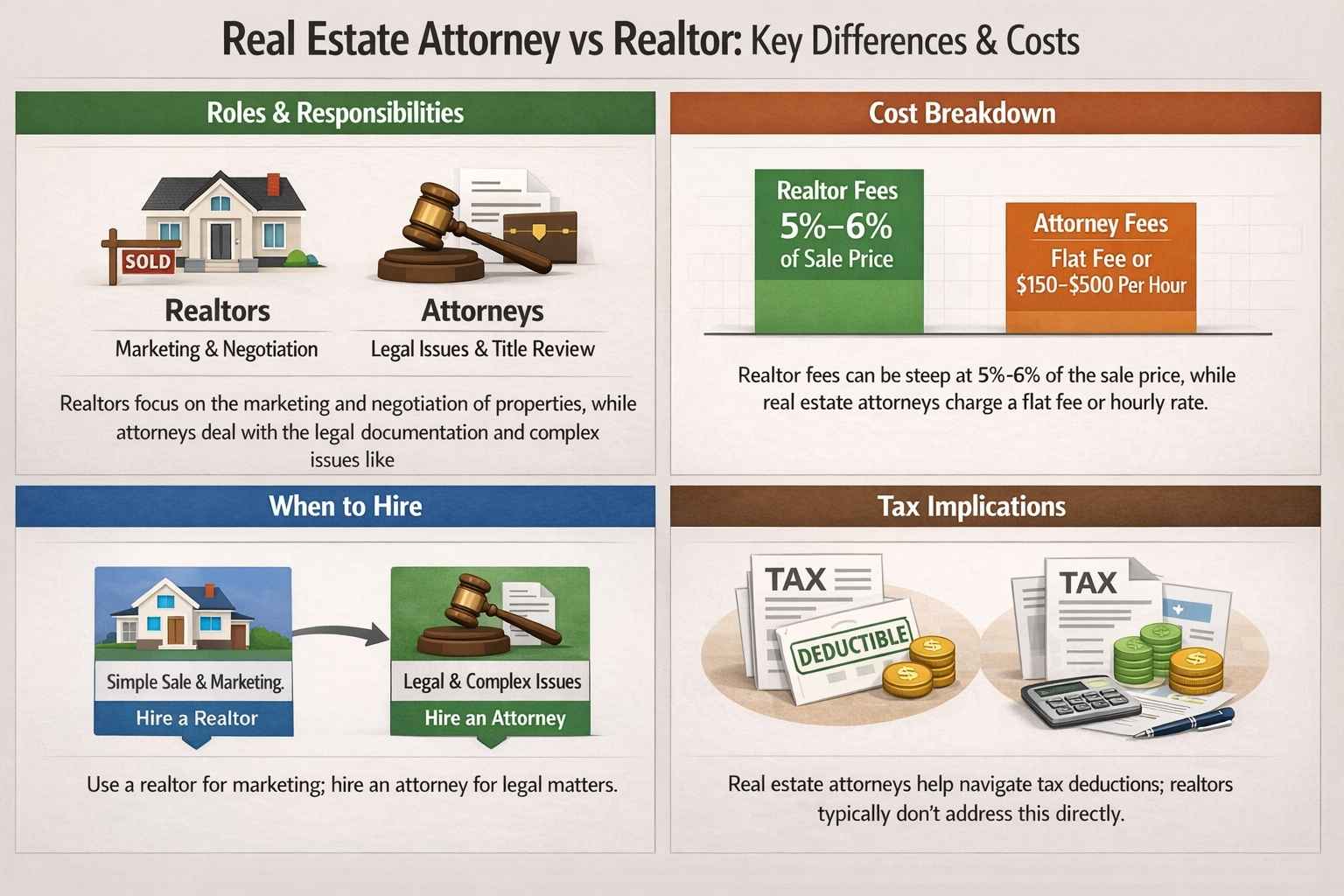
Real estate attorneys and realtors serve different functions in a real estate transaction. A real estate attorney handles the legal aspects, such as contract review and title issues, and generally charges an hourly rate or flat fee. A realtor, on the other hand, focuses on marketing, negotiation, and completing the sale process, earning a commission, usually around 5%-6% of the sale price. While real estate attorneys may be cheaper for simpler legal tasks, realtors are typically more expensive due to their commission structure for property sales.
What Does a Real Estate Attorney Do?
A real estate attorney is a legal expert specializing in property law. Their main role is to provide legal counsel and handle the legal aspects of a real estate transaction. This can include:
Contract Review and Drafting: Real estate attorneys ensure that contracts comply with state laws and protect their client’s interests.
Title Issues: They assist in resolving any title issues, such as disputes over property ownership.
Dispute Resolution: Attorneys are crucial when legal disputes arise, including those involving property boundaries, ownership, or inheritance.
Closing Assistance: In some states, an attorney must be present at closing to ensure the legality of the transaction.
While their role is mostly legal, real estate attorneys can also help buyers or sellers navigate more complex situations, making them indispensable for high-risk transactions.
What Does a Realtor Do?
A realtor is a licensed professional responsible for assisting in buying, selling, and renting properties. They perform the following tasks:
Marketing and Listing: Realtors are responsible for listing properties, creating marketing materials, and ensuring the property reaches potential buyers.
Negotiation: They negotiate the price and terms between the buyer and seller.
Transaction Management: Realtors handle the paperwork associated with the sale, such as purchase agreements and disclosure forms.
Market Expertise: Realtors use their knowledge of the local market to help clients set realistic prices and make informed decisions.
Realtors are focused on the transaction process, and their goal is to make the buying or selling experience as smooth as possible.


Property Tax vs Real Estate Tax: Are Real Estate Taxes the Same as Property Taxes?

Cost Comparison Between a Real Estate Attorney and a Realtor
Real Estate Attorney Costs
Real estate attorneys usually charge either an hourly rate or a flat fee. Here’s a breakdown of the typical costs:
Hourly Rate: On average, attorneys charge between $150 and $500 per hour, depending on their experience and location.
Flat Fees: For specific services, such as contract review or attending a closing, attorneys may charge a flat fee that ranges from $500 to $1,500 or more.
Realtor Commission Fees
Realtors typically charge a commission on the sale price of the property. The standard commission rate is between 5% and 6%, which is split between the buyer’s agent and the seller’s agent. For example, on a $300,000 home sale, a 5% commission would amount to $15,000.
Which Is Cheaper?
For straightforward transactions (no legal disputes, clear title), a realtor might be more affordable due to the flat rate commission structure.
For complex transactions (title issues, legal disputes), a real estate attorney’s hourly rate may be more cost-effective.
When Should You Hire a Real Estate Attorney or a Realtor?
When to Hire a Real Estate Attorney
A real estate attorney is necessary if:
You are dealing with a complicated property sale or legal disputes.
Title issues or property boundary disputes arise.
You are buying or selling property in states where an attorney is required at closing.
When to Hire a Realtor
A realtor is ideal when:
You need help with marketing and finding potential buyers.
You are looking for an expert in negotiation and property pricing.
You want someone to handle the logistics of the sale from start to finish.
Current Data Table: Real Estate Tax vs Property Tax vs Personal Property Tax (2026)
| Term Used | What It Usually Means | What It’s Based On | Who Sets It | Where It’s Paid |
|---|---|---|---|---|
| Real Estate Tax | Annual tax on real property (land + building) | Assessed value × tax rate | Local governments | County/municipality tax bills |
| Property Tax | Broad term, often refers to real estate tax, but can include personal property tax | Assessed value (for real estate) or value of movable property | State and local | Local tax authority |
| Personal Property Tax | Tax on movable items (vehicles, boats, business equipment) | Value of the asset | State/local | Local tax authority |
Bullet-Point Summary (Key Takeaways)
Real Estate Attorneys: Specialize in legal matters like contracts, title issues, and dispute resolution. Fees range from $150 to $500 per hour.
Realtors: Handle property marketing, negotiations, and transaction logistics. Their commission is typically 5%-6% of the sale price.
Cost Comparison: Realtors are more affordable for straightforward transactions, while real estate attorneys are necessary for complex legal issues.
Escrow and Taxes: Real estate taxes are often collected through escrow accounts; understanding this process can help manage costs.
State Laws: Certain states require a real estate attorney for closing, making it important to understand local regulations.

How Long Does It Take to Get a Real Estate License? 2026 Career Guide

Can a Property Owner Block an Easement? Legal Rights, Remedies & State Laws Explained

FAQ Section
Is a real estate attorney cheaper than a realtor?
In general, realtors are more affordable for basic transactions due to their commission structure, while real estate attorneys are needed for legal issues and may charge hourly or flat fees.
How much do real estate attorneys cost?
The average rate for a real estate attorney is $150 to $500 per hour, with some offering flat fees for specific services.
Can I use a real estate attorney instead of a realtor?
A real estate attorney can assist with legal tasks, but realtors are needed for property marketing and negotiations. It’s usually best to use both in complex transactions.
How much are realtor commissions?
Realtor commissions are generally 5%-6% of the final sale price, split between the buyer’s and seller’s agents.
Conclusion
When choosing between a real estate attorney and a realtor, it’s crucial to evaluate the complexity of your transaction. While real estate attorneys may be cheaper for legal complexities, realtors are often more affordable for standard transactions due to their commission structure. Both professionals offer essential services, so understanding their roles and costs will help you make the best decision for your real estate needs.
Trustworthy External Links
To ensure trustworthiness and authority in the article, here are some reliable external links from verified sources:
These links will add credibility to the article and support the content with authoritative sources.
Featured Snippet
Real estate attorneys and realtors provide distinct services during a property transaction. While real estate attorneys typically charge an hourly rate or a flat fee for legal services, such as contract review and title issues, realtors charge a commission, usually between 5% and 6% of the property’s sale price. For basic transactions, realtors are usually more affordable, while real estate attorneys are necessary for legal complexities. It’s essential to consider the nature of your transaction when deciding between the two professionals.


Join The Discussion