


Real Estate Attorney for Breach of Contract: Your Comprehensive Guide to Legal Options and Remedies
AI Overview: Real Estate Breach of Contract A real estate attorney for breach of contract is a legal professional specializing in disputes where a buyer or seller fails to fulfill the terms of the contract in a property transaction. Key remedies include specific performance (forcing the sale), liquidated damages (keeping the earnest money), or suing for financial losses. In 2026, the most common causes for these disputes involve financing failures, title issues, and undisclosed property defects. Hiring a specialized breach of contract lawyer is essential to navigate litigation, enforce the agreement, and secure a favorable settlement.
Table of Contents
Introduction In the high-stakes world of property exchange, a signed agreement acts as the law between the parties. However, when one party fails to uphold their end of the bargain, the financial and emotional toll can be devastating. This is where a real estate attorney for breach of contract becomes your most valuable asset. Whether you are a buyer denied your dream home or a seller left with a stagnant property, understanding the breach of real estate contract landscape is vital. This article is worth reading because it breaks down complex contract law, analyzes 2026 legal trends, and offers actionable strategies to resolve a contract dispute effectively.


Property Tax vs Real Estate Tax: Are Real Estate Taxes the Same as Property Taxes?

What Constitutes a Breach of Contract in Real Estate Transactions?
A breach of contract occurs when one party involved in a real estate transaction fails to perform a specific obligation outlined in the terms of the contract without a valid legal excuse. In the eyes of the law, not every error is a lawsuit-worthy event; however, in real estate, time and precise performance are usually of the essence.
To prove a breach of contract dispute exists, a real estate lawyer must demonstrate four key elements: the existence of a valid contract, performance by the plaintiff, failure to perform by the defendant (breaching party), and resulting damages.
Types of Contract Breaches Understanding the type of breach is crucial for determining the legal remedy.
- Material Breach: This is a significant failure that defeats the purpose of the contract. For example, if a seller refuses to sign the deed over to the buyer, this is a material breach.
- Minor Breach: Also known as a partial breach, this occurs when a party violates a minor portion of the contract terms (e.g., moving out one day late).
- Anticipatory Breach: This happens when one party indicates in advance that they will not fulfill their contractual obligations.
Check our detailed guide on Property Documentation for more on drafting secure agreements.
Common Causes of Real Estate Contract Disputes
When a contract dispute arises, it is rarely out of nowhere. Experienced breach of contract lawyers often see patterns in why deals fall apart.
Financing and Contingencies A major contract issue often stems from financing. If a buyer cannot secure a mortgage by the agreed date and fails to notify the seller properly, they may be in default. A real estate attorney helps determine if the failure to secure funds was a genuine inability or a lack of good faith effort.
Title and Disclosure Issues Real estate contract disputes frequently happen when a title search reveals liens or ownership issues that the seller cannot clear. Additionally, if a seller hides a known defect—like a crumbling foundation—this can lead to a lawsuit for fraud and breach.
Remedies Available for Breach of Real Estate Contract
When a breach of real estate contract is established, the law provides specific remedies. A breach of contract attorney will analyze the contract terms to determine the best course of action.
Monetary Damages Financial compensation is the most common remedy. This is intended to put the non-breaching party in the position they would have been in had the contract been fulfilled.
- Compensatory Damages: Covers the direct financial loss (e.g., the difference in purchase price).
- Liquidated Damages: In many real estate contracts, the parties agree beforehand that the seller can keep the earnest money deposit if the buyer breaches.
- Incidental Damages: Costs incurred due to the breach, such as temporary housing or additional inspections.
Specific Performance In unique cases, money isn’t enough. Since real estate is considered unique, a court may order specific performance, forcing the breaching party to go through with the sale. This is a powerful tool in a real estate lawyer’s arsenal, particularly for buyers who want that specific property.
Contract Termination (Rescission) Sometimes, the best legal option is to undo the deal entirely. Terminating the contract allows both parties to walk away, usually returning the buyer’s deposit. This is common when a mutual mistake or fraud renders the agreement invalid.
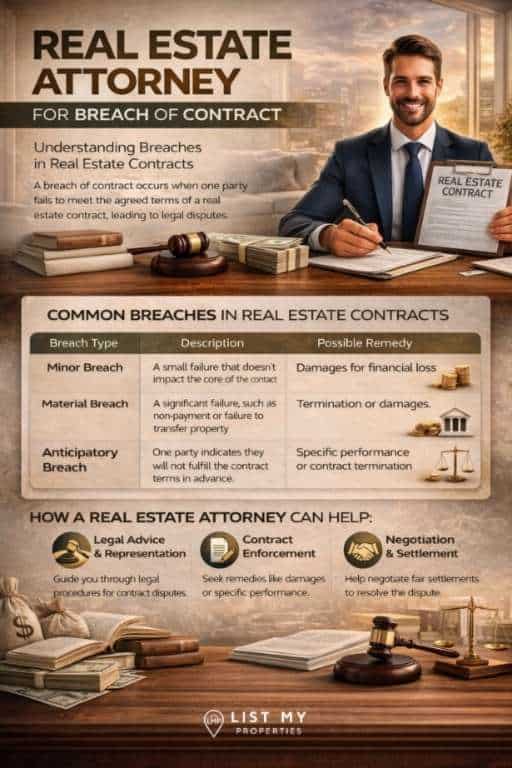
How a Real Estate Attorney for Breach of Contract Can Help
Navigating a breach of contract lawsuit without legal representation is risky. A specialized law firm brings expertise in local statutes, negotiation, and litigation strategy.
Case Evaluation and Consultation The process begins with a consultation. The attorney reviews the contract, correspondence (emails, texts), and timeline. They assess whether a material breach occurred or if the issue is a minor breach that can be fixed. They will also determine if you have a case for specific performance or should settle for damages.
Mediation and Negotiation Before filing a lawsuit, a skilled breach of contract lawyer will attempt to resolve the dispute through mediation. This is often faster and cheaper than a trial. By leveraging the threat of litigation, an attorney can often pressure the breaching party to settle.
Litigation and Trial If negotiation fails, your lawyer will file a complaint in the appropriate court. The litigation process involves discovery (exchanging evidence), depositions, and eventually a trial where a judge or jury decides the outcome.
Suing Seller for Breach of Contract: A Buyer's Perspective
Suing seller for breach of contract real estate attorney services are in high demand when property values fluctuate. If a seller gets cold feet or receives a higher offer after signing, they might try to back out.
Failure to Convey Clear Title If the seller cannot prove they own the property free and clear (e.g., unpaid taxes or hidden heirs), they are in breach. A real estate transaction cannot close without clear title, and the buyer may be entitled to damages for their wasted time and expenses.
Failure to Disclose Defects In most states (like California and Florida), sellers must disclose material facts about the property’s condition. Hiding termite damage or a leaky roof is a breach of the duty of good faith. A real estate attorney can help you sue for the cost of repairs or even rescind the purchase.
The Seller’s Rights: When the Buyer Breaches
Sellers also face risks. If a buyer walks away without a valid contingency, the seller faces financial losses (carrying costs, mortgage payments, relisting fees).
Keeping the Earnest Money Most real estate contracts contain a liquidated damages clause. This states that if the buyer breaches, the seller keeps the deposit. However, enforcing this can sometimes require a breach of contract dispute intervention if the buyer refuses to release the funds held in escrow.
Suing for Damages If the property value has dropped significantly since the deal was signed, keeping the deposit might not be enough. A breach of contract attorney can help the seller sue for the difference in price between the original contract and the eventual sale price to a new buyer.

How Long Does It Take to Get a Real Estate License? 2026 Career Guide

Can a Property Owner Block an Easement? Legal Rights, Remedies & State Laws Explained

The Cost of Hiring a Breach of Contract Lawyer
Understanding the cost structure is vital before hiring a law firm.
Hourly vs. Contingency Most real estate attorneys charge an hourly rate for contract disputes. However, in some breach of contract cases involving significant damages, lawyers might work on a contingency fee or a hybrid model.
Recovering Legal Fees Check your agreement. Many standard real estate contracts have an “attorney’s fees provision.” This means the losing party in a lawsuit must pay the winner’s legal costs. This provision is a powerful motivator for the breaching party to settle early.
Key Takeaways on Breach of Real Estate Contract
- Time is of the Essence: Deadlines in a real estate contract are usually strict. Missing a date can be a breach.
- Documentation is Key: Keep every email, text, and document. These are crucial evidence for your real estate lawyer.
- Seek Mediation: Litigation is expensive. A good attorney often solves the contract issue without stepping into a courtroom.
External Trustworthy Links:
National Association of Realtors – Industry standards and guidelines.
Investopedia on Real Estate Contracts – Understanding real estate contracts.
LegalZoom – Legal insights into contract law and remedies.
Important Things to Remember (Summary)
- A breach of contract happens when a party fails to meet the terms of the contract without a legal excuse.
- Remedies include specific performance, monetary damages, and contract termination.
- Real estate attorneys are essential for navigating disputes, interpreting contract law, and handling litigation.
- The non-breaching party has a duty to mitigate their damages (minimize their loss).
- Always check for an “attorney’s fees clause” in your real estate agreement to potentially recover legal costs.
FAQ Section
Q: What is a breach of contract in real estate?
A: A breach occurs when a buyer or seller fails to perform a specific obligation under the terms of the contract, such as missing a closing date or failing to deliver a clear title.
Q: Can you sue a real estate agent for breach of contract?
A: Yes, if the agent violated their fiduciary duty or the terms of the representation agreement. However, most disputes with agents are negligence claims rather than pure contract breaches.
Q: Is it worth suing for breach of contract?
A: It depends on the financial losses and the value of the property. A consultation with a real estate attorney can help weigh the costs of litigation against the potential recovery.
Q: How are damages calculated in breach of contract cases?
A: Damages are usually calculated based on the actual financial loss suffered. This includes the difference in property value, expenses incurred due to the breach, and sometimes legal fees.
Q: How long do I have to file a breach of contract lawsuit?
A: This depends on the statute of limitations in your state. In many states, you have 4 to 5 years for written contracts, but you should act immediately.


Join The Discussion