
13/06/2026
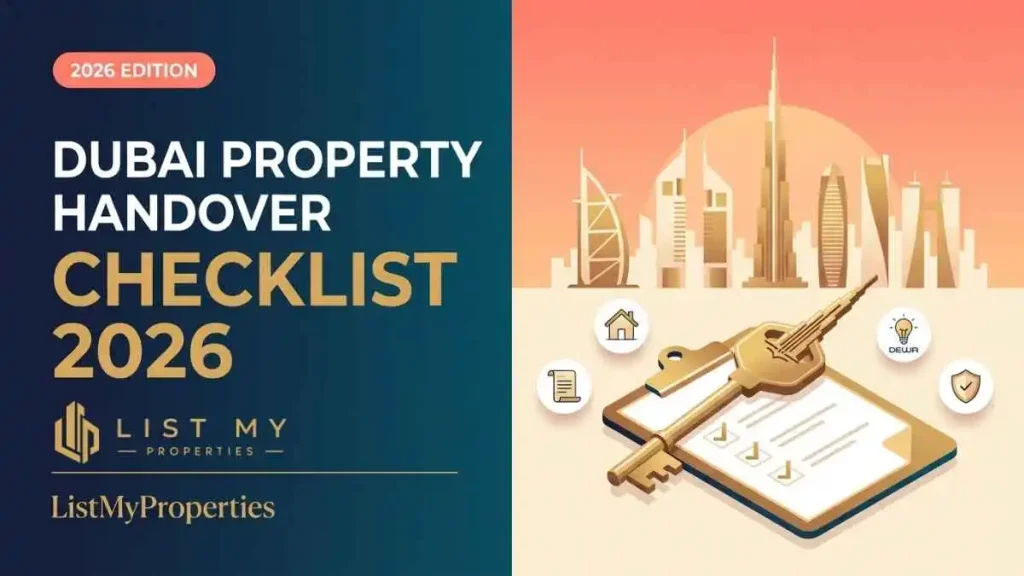
Dubai Property Handover Checklist 2026
By Md Arshad
Dubai Property Buying GuideLast updated 20/06/2026

Dubai Property Handover Checklist 2026: Documents, Snagging, DEWA and Final Payment Steps
Dubai property handover is not just the moment when a buyer collects keys. It is the final verification stage before a completed unit becomes usable, rentable, insurable and ready for ownership administration. A buyer who rushes this stage can miss defects, pay unclear charges, accept incomplete work or delay utility activation.
This 2026 Dubai property handover checklist explains what buyers should verify before handover day, what to inspect inside the unit, which documents to collect, how service charges and DEWA fit into the process, and what to do after receiving keys. It is written for off-plan buyers, overseas investors, landlords preparing to rent, and first-time Dubai property owners.
AI Overview answer: A Dubai property handover checklist should include developer notice verification, SPA review, final payment confirmation, snagging inspection, service charge check, DEWA activation, title deed or Oqood-to-title process, access cards, warranties, manuals and post-handover defect reporting. Buyers should inspect before signing final acceptance wherever possible.
Featured Snippet Overview: A Dubai property handover checklist helps buyers verify the unit, documents, payments, service charges, snagging, DEWA activation, access cards, warranties and title/Oqood status before collecting keys. Buyers should inspect the property, record defects in writing, confirm final charges and keep all handover documents before moving in or renting the property.
- Dubai property handover is the final inspection and documentation stage before key collection.
- Buyers should review SPA terms, final payment, service charges, Oqood/title status and handover notice.
- Snagging should be done before final acceptance wherever possible.
- DEWA, cooling, move-in permits and access cards should be arranged before occupancy.
- All defects should be recorded with photos, videos and written acknowledgement.
- Investors should prepare the property quickly after handover to reduce vacancy loss.
- Overseas buyers should consider a power of attorney and professional snagging inspection.
- Use official DLD, Dubai REST and DEWA channels for verification.
Table of Contents
Why Dubai Property Handover Matters More in 2026
Dubai’s residential market remains highly active in 2026, with off-plan sales continuing to dominate transaction activity. That means more buyers are approaching completion, payment-plan milestones and handover inspections. A busy off-plan market creates opportunity, but it also increases the importance of documentation, construction quality checks and accurate handover timelines.
For investors, handover is also the transition from projected return to real return. Before handover, a property exists mostly as a contract, payment plan and expected completion date. After handover, the buyer must deal with service charges, maintenance, utility activation, furnishing, leasing, property management and tenant readiness.
The most dangerous mistake is treating handover as a formality. It is not. It is the buyer’s last practical chance to record visible defects, verify the promised specification, collect key documents and prepare the property for occupancy or rental.
Quick Dubai Property Handover Checklist
Use this checklist before signing final acceptance or collecting keys. Some steps may differ depending on developer, unit type and whether the property is ready, off-plan, mortgaged or bought remotely.
| Stage | What to Check | Why It Matters |
|---|---|---|
| Developer notice | Completion or handover notice, appointment date, balance payable | Confirms the developer is ready to start handover |
| SPA review | Unit number, size, parking, finishes, included appliances, payment terms | Helps compare delivered unit with contractual promise |
| Final payment | Outstanding balance, admin fees, service charge advance, receipts | Avoids payment disputes and unexpected charges |
| Snagging | Walls, floors, doors, windows, plumbing, AC, electrical, balcony, kitchen | Records defects before final acceptance |
| Legal documents | Handover certificate, title deed/Oqood status, warranties, manuals | Supports ownership, resale, leasing and maintenance |
| Utilities | DEWA activation, district cooling if applicable, internet readiness | Makes the property usable for owner or tenant |
| Post-handover | Defect follow-up, insurance, furnishing, listing for rent, Ejari if leased | Turns the property into a usable or income-producing asset |
Documents to Prepare Before Handover Day
A buyer should prepare documents before the handover appointment instead of searching for them on the day. The developer may ask for identity documents, payment receipts, the SPA and any authorization documents if someone else is attending on behalf of the buyer.
For overseas buyers, this step is even more important. If a representative is collecting keys or attending inspection, the power of attorney and identity documents should be accepted by the developer in advance.
Core Documents Buyers Should Carry
- Passport copy
- Emirates ID, if applicable
- Sales and Purchase Agreement
- Oqood certificate or initial sale registration evidence for off-plan units
- Payment receipts and final statement of account
- Developer handover notice
- Power of attorney, if a representative is attending
- Mortgage bank clearance or bank instructions, if financed
- Previous correspondence about upgrades, extras or unit changes
Documents to Collect During or After Handover
The buyer should request copies of all handover-related documents and keep them in a digital folder. These records can be useful for resale, leasing, warranty claims, service charge disputes and property management.
- Handover certificate or key collection confirmation
- Snagging report acknowledged by developer or handover team
- Access card and key receipt
- Parking bay confirmation
- Service charge schedule or account setup details
- Utility activation instructions
- Appliance manuals and warranty cards
- Building rules and move-in guidelines
- Defect liability or warranty procedure
Room-by-Room Snagging Checklist
Snagging means inspecting the property for defects, incomplete work, finishing issues, poor installation or functional problems. Buyers should ideally conduct snagging before final acceptance and before moving furniture into the unit.
A professional snagging inspector can be useful, especially for villas, larger apartments, luxury units, or buyers who are not in Dubai. However, even if a buyer uses an inspector, they should understand the basic checks.
Walls, Ceilings and Floors
- Check cracks, uneven paint, stains and water marks.
- Inspect tile alignment, hollow tiles, chipped corners and grout gaps.
- Look for ceiling patches, dampness, bubbling paint or poor finishing.
- Check skirting boards and floor transitions.
Doors, Windows and Balcony
- Open and close every door and window.
- Check locks, handles, hinges and seals.
- Inspect balcony slope and drainage.
- Check glass scratches, frame alignment and water leakage signs.
Electrical and Lighting
- Test every socket with a plug tester or phone charger.
- Switch all lights on and off.
- Check distribution board labeling.
- Test doorbell, intercom and smoke detector where accessible.
Plumbing and Bathrooms
- Run every tap and check water pressure.
- Flush toilets and check leaks.
- Inspect shower drainage and slope.
- Check under sinks for leakage.
- Confirm hot water works where applicable.
Air Conditioning and Ventilation
- Turn on AC in every room.
- Check cooling performance and unusual noise.
- Inspect vents, thermostats and remote controls.
- Ask for maintenance access details.
Kitchen and Appliances
- Open and close cabinets and drawers.
- Check countertop scratches, gaps and sealant.
- Test developer-supplied appliances.
- Inspect sink drainage and leakage.
- Confirm appliance manuals and warranties.

Warning: Do not rely only on verbal promises such as “we will fix everything later.” Record snags in writing, take photos and request an acknowledged defect list.
Dubai Property Handover Costs to Budget
Handover can involve more than the final installment. Buyers should ask the developer for a clear statement of account before the appointment. This should show the remaining balance, any service charge advance, admin charges, utility-related requirements and any other payable items.
| Cost Item | When It Appears | Buyer Note |
|---|---|---|
| Final installment | Before or at handover | Check against SPA payment plan |
| Service charge advance | Often at/after handover | Verify through developer and DLD Service Charge Index where possible |
| Snagging inspection | Before final acceptance | Optional but recommended for many buyers |
| DEWA deposit/activation | Before occupancy | Use official DEWA channels |
| District cooling deposit | If applicable | Check provider and account setup process |
| Move-in permit | Before moving furniture | Often required by building management |
| Insurance | After handover | Especially important for landlords and mortgaged units |
| Furnishing | Before renting or moving in | Affects rental readiness and ROI |
Service Charges: Check Before Accepting the Property
Service charges can affect both ownership cost and rental ROI. A buyer should ask the developer for the service charge schedule and also check official DLD service charge resources where available. This is especially important for apartments, hotel-style residences and communities with extensive facilities.
Service charges may include maintenance, utilities for common areas, management, insurance, master community charges and reserve fund contributions. The total annual amount can affect whether the unit is profitable as a rental property.
DEWA, Cooling and Move-In Setup
After handover, the property needs utilities before it can be occupied or rented. DEWA activation is a core post-handover step for electricity and water. If the building uses district cooling, the owner or tenant may also need to open an account with the relevant cooling provider.
For rental properties, utility activation and Ejari timing should be planned carefully. A landlord who wants to rent the property quickly should make sure the unit is clean, accessible, photographed, furnished if needed and ready for viewings immediately after handover.
Area-Level Handover Priority Table for Dubai Buyers
The table below is not a defect ranking. It is a practical priority guide. Areas with high off-plan activity, high transaction volume, luxury pricing or many similar listings deserve extra document and snagging discipline because mistakes can be expensive.
| Area / Segment | 2026 Market Signal | Handover Priority | Extra Checks |
|---|---|---|---|
| Dubai South | High off-plan apartment activity in Q1 2026 reports | Very High | Completion notice, building access, utilities, parking allocation, service charges |
| Jumeirah Village Circle | High ready-apartment activity and heavy rental/listing volume | High | Unit condition, common areas, service charges, rental readiness |
| DAMAC Islands / DAMAC Islands 2 | Strong off-plan villa/townhouse market visibility | Very High | Plot/built-up details, outdoor works, drainage, developer deliverables |
| DAMAC Hills 2 | Active ready villa/townhouse segment | High | AC, plumbing, landscaping, boundary walls, community access |
| Business Bay | High-density apartment market with varied buildings | High | Service charges, parking, defects, lift/common area readiness |
| Dubai Creek Harbour | Premium waterfront apartment market | High | View, balcony, glass, finishing, service charge schedule |
| Palm Jumeirah | Prime pricing and high-value units | Very High | Luxury finish inspection, leakage, warranties, service charges, handover documentation |
| Dubai Hills Estate | Family and investor demand across apartments/villas | High | Layout, snagging, community charges, utility readiness |
What to Do If You Find Defects
If the buyer finds defects, they should document each issue with photos, videos, room location and description. The snag list should be shared with the developer or handover team in writing, and the buyer should request acknowledgement.
Minor snags are common in new properties, but serious issues such as water leakage, major AC faults, electrical faults, balcony drainage problems or missing promised items should not be ignored. The buyer should ask for a timeline to fix defects and keep all communication documented.
After Handover: What Owners Should Do Next
After receiving keys, the buyer’s work is not finished. The property must be secured, utilities activated, access cards tested, warranties saved and insurance considered. If the unit is for investment, the owner should prepare it for rental quickly to avoid vacancy loss.
Post-Handover Checklist
- Change or confirm access and key control.
- Activate DEWA and cooling accounts where applicable.
- Confirm service charge account setup.
- Save warranties, manuals and handover certificates.
- Schedule defect follow-up with developer.
- Deep clean the property.
- Arrange furnishing or appliance setup.
- Photograph the unit professionally if renting or selling.
- List the property for rent or sale on ListMyProperties.
- Prepare Ejari process if leasing the unit.
List My Properties
Dubai Property Handover Readiness Checklist 2026
Tick every step before collecting keys or signing final acceptance. Get a live readiness score and risk level for your unit.
1. Before Handover Day
2. Snagging & Inspection
3. Documents & Legal Checks
4. Utilities, Service Charges & Move-in
5. After Handover
Items completed—
Readiness—
Risk level—
Items pending—
Book a professional snagging inspection
Share your details and our team will help arrange a professional snagging inspection and handover support for your unit.
Thank you! Tap below to chat with us on WhatsApp now.
💬 Continue on WhatsAppImportant note: This table is not a defect ranking. It is a practical priority guide based on market activity, property type, transaction value and handover complexity.
FAQ
What is property handover in Dubai?
Property handover is the stage where the developer or seller transfers practical possession of a completed property to the buyer. It usually involves document verification, final payment, snagging, key collection and utility setup.
Should a buyer do snagging before handover?
Yes. Snagging before final acceptance helps the buyer record defects, finishing issues and missing items while the developer is still responsible for completing the unit properly.
What documents are needed for Dubai property handover?
Common documents include passport, Emirates ID if applicable, SPA, payment receipts, handover notice, Oqood or registration evidence, and power of attorney if a representative is attending.
Can an overseas buyer complete handover remotely?
Yes, but the buyer should confirm developer requirements in advance and use a properly authorized representative where needed. Remote buyers should also consider professional snagging.
When should DEWA be activated after handover?
DEWA should be activated before occupancy or tenant move-in. Owners should use official DEWA channels and follow the required move-in process.
Do service charges start at handover?
Service charge responsibility commonly begins around handover or ownership commencement, depending on developer terms and documentation. Buyers should verify the schedule before accepting handover.
What if the developer refuses to fix defects?
The buyer should document defects in writing, request acknowledgement and keep all communication. For serious disputes, the buyer may need professional or legal advice through official channels.
What should be checked during handover inspection?
Buyers should check walls, floors, ceilings, windows, doors, plumbing, electrical sockets, AC, balcony, parking allocation, appliances, manuals, warranties and access cards.
Trusted External Sources
- Dubai Land Department – Property Status Enquiry
- Dubai Land Department – Service Charge Index:
- Dubai Land Department – Verify Title Deed
- Dubai Land Department – Dubai REST
- DEWA – Activation of Electricity/Water Move-in
- Cavendish Maxwell – Dubai Residential Market Performance Q1 2026
- CBRE – UAE Real Estate Market Review Q1 2026
Conclusion
Dubai property handover is one of the most important stages in the buying process. It is the moment when the buyer moves from a signed contract to real ownership responsibility. A rushed handover can lead to missed defects, unclear charges, utility delays and rental-readiness problems.
The safest approach is to follow a written checklist, inspect the unit carefully, verify service charges, activate utilities through official channels and keep all documents in one place. Buyers should not rely only on verbal assurances. Every defect, payment and handover promise should be documented.
For investors, a smooth handover also protects ROI. The faster the unit becomes clean, functional, photographed and ready for rent, the lower the vacancy loss. For end-users, the benefit is peace of mind before moving into a new home.
Key Takeaways
- Dubai property handover is not just key collection; it is a legal, financial and inspection checkpoint.
- Buyers should review the SPA, handover notice, final statement of account and payment receipts.
- Snagging should be completed before final acceptance wherever possible.
- Service charges should be checked before accepting the property.
- DEWA and cooling activation should be planned before move-in or tenant occupancy.
- Buyers should collect warranties, manuals, access cards, parking details and handover certificates.
- Defects should be recorded with photos, videos and written acknowledgement.
- Overseas buyers should use a trusted representative or professional snagging company.
- Investors should prepare the unit quickly after handover to reduce vacancy loss.
- Use official DLD, Dubai REST and DEWA sources instead of relying only on screenshots or verbal claims.
Pro Tip: Before attending handover, create a folder named with the property name, unit number and handover date. Save the SPA, Oqood/title document, payment receipts, handover notice, snagging photos, service charge schedule, DEWA details, warranties and all developer emails in that folder. This will make future resale, leasing, warranty claims and dispute handling much easier.
Warning: Do not sign final acceptance only because the developer or representative says defects will be fixed later. Minor cosmetic snags may be manageable, but serious issues such as leakage, AC failure, electrical faults, balcony drainage problems, missing promised items or major finishing defects should be recorded in writing before acceptance.
Disclaimer: This article is for general informational purposes only. It is not legal, financial, engineering or property inspection advice. Dubai property handover requirements may differ by developer, project, property type, mortgage status and buyer profile. Buyers should verify details with the developer, Dubai Land Department, DEWA, building management and qualified professionals before making decisions.

Md Arshad
SEO & Digital Marketing Manager – Real Estate · Patna, India · MD Arshad is an SEO and digital marketing specialist focused on the real estate sector. He works as Digital Marketing Specialist at Dhruv Iconic Pvt. Ltd., a RERA-registered real estate company in Patna with 1.5+ years in the market, and has spent the last 0.5 years partnering with multiple real estate brands as a freelance SEO and content strategist. His work covers technical SEO, keyword research, competitor gap analysis, content strategy, and organic growth. He writes ListMyProperties guides to turn complex UAE real estate processes into clear, source-backed content, with every legal, tax, or fee claim referenced to official authorities such as DLD, RERA, DET, and the FTA. Connect on LinkedIn.
Leave a Reply